Artificial turf construction has become a preferred choice for sports facilities, schools, commercial spaces across India. With growing demand for low-maintenance and high-durability surfaces, understanding the complete installation process is essential for property owners, contractors, and investors.
Why Proper Turf Installation Matters
Artificial turf is a long-term investment, and the installation quality directly determines its lifespan and performance. Many turf failures in India are not due to poor materials but due to incorrect base preparation or drainage.
A professionally installed turf ensures efficient water flow, consistent playing performance, and durability of up to 8–10 years. It also reduces long-term maintenance costs and improves safety for players.
Project Timeline Overview
Most artificial turf projects are completed within 2 to 4 weeks, depending on site conditions and size.
| Stage | Activity | Timeline |
| 1 | Site inspection & planning | 1–2 days |
| 2 | Ground excavation | 2–4 days |
| 3 | Base preparation | 4–6 days |
| 4 | Drainage system installation | 2–3 days |
| 5 | Turf laying & joining | 3–5 days |
| 6 | Infill & finishing | 2–3 days |
Installation Process Infographic
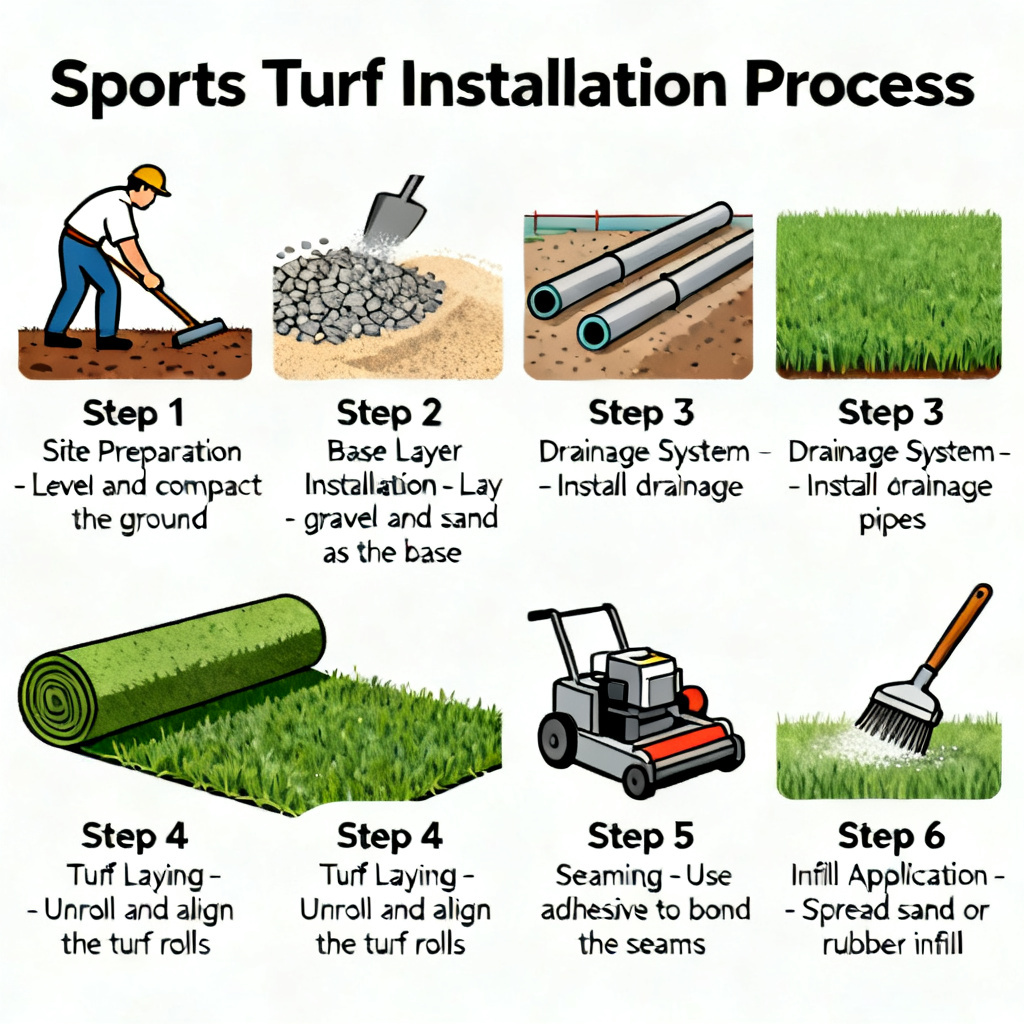
Step 1: Site Inspection and Planning
Every successful turf project starts with a detailed site inspection. This stage is where engineers evaluate soil conditions, slope, and drainage patterns to design the right foundation.
The goal is not just to measure land but to understand how the ground behaves under load and water exposure. Without this step, even high-quality turf can fail prematurely.
Step 2: Ground Excavation
Once planning is complete, excavation removes the unstable top layer of soil. This creates space for a strong foundation.
Consistency is critical here. Uneven excavation leads to surface irregularities, which affect both gameplay and drainage. Professional contractors use laser leveling tools to maintain accuracy across the site.
Step 3: Base Preparation (Foundation Layer)
Base preparation is the most important phase of artificial turf installation. It acts as the structural backbone of the entire system.
Multiple layers of aggregates are laid and compacted to create a stable, load-bearing surface. Poor compaction can cause sinking or cracks within months, especially in high-traffic sports turfs. This stage ultimately determines the long-term durability of the field.
Step 4: Drainage System Installation
Drainage is often underestimated but plays a crucial role in turf longevity. In cities like Chennai with heavy seasonal rains, improper drainage leads to waterlogging and surface damage.
A well-designed system ensures that water flows away quickly through slope gradients or pipe networks. Proper testing at this stage prevents expensive rework later.
Step 5: Laying the Artificial Turf
At this stage, the synthetic turf is rolled out and aligned carefully. Fiber direction must remain consistent across the entire field to ensure uniform appearance and ball movement.
Seaming is a precision task. Even minor misalignment can lead to visible joints or weak bonding, which affects durability over time.
Step 6: Infill Application and Finishing
The final stage involves applying infill materials such as silica sand and rubber granules. This step stabilizes the turf fibers and improves cushioning.
Proper brushing ensures that the infill settles evenly across the surface. This directly impacts player comfort, traction, and ball behavior.
Before & After Project Example
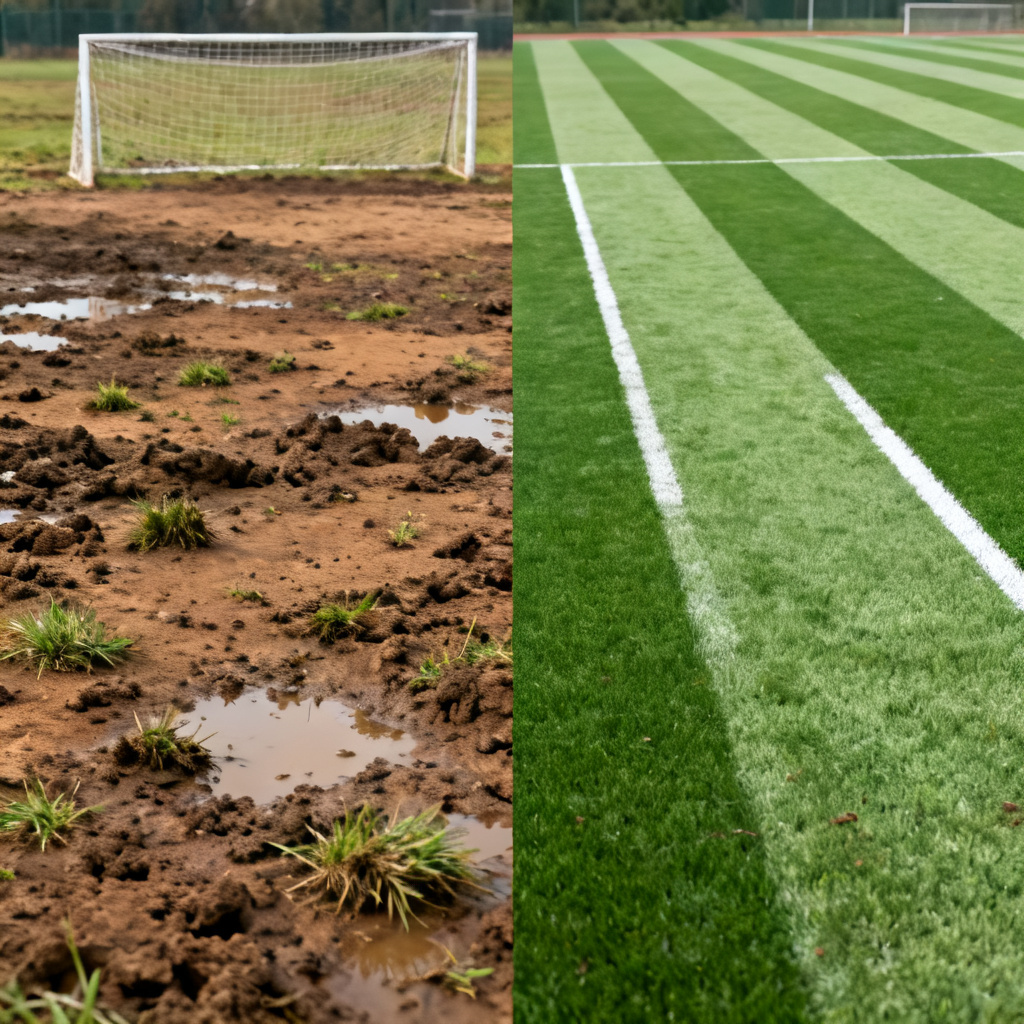
Real Project Case Study (Chennai)
A football turf project completed in Chennai highlights the importance of proper execution.
Project details:
- Size: 5,000 sq. ft.
- Total cost: ₹6.5 lakhs
- Completion time: 21 days
Challenge:
The site had clay-heavy soil, which caused water retention during initial testing.
Solution:
A reinforced drainage system with perforated pipes and an improved aggregate base was installed.
Outcome:
- Zero waterlogging even after heavy rainfall
- Monthly booking revenue: ₹1.2–₹1.8 lakhs
- ROI achieved within 6–8 months
Client Testimonial
“We were worried about waterlogging during monsoon, but the drainage system works perfectly. Within 6 months, our turf started generating steady income.”
— Turf Owner, Chennai
Artificial Turf Material Comparison
Choosing the right turf material is equally important as installation.
Monofilament Turf offers a natural grass-like appearance and is highly durable, making it ideal for football fields.
Fibrillated Turf is more budget-friendly but tends to flatten over time, making it suitable for low-traffic areas.
Hybrid Turf Systems combine durability with enhanced comfort and are often used in premium sports facilities.
Pile Height Guide:
- 20–30 mm: Landscaping
- 40–50 mm: Multi-sport
- 50 mm+: Professional football
Maintenance After Installation
Artificial turf requires minimal but consistent care. Regular brushing keeps fibers upright, while debris removal prevents clogging of drainage layers.
Periodic inspection of seams and infill levels ensures long-term performance. For commercial turfs, monthly maintenance checks are recommended to avoid costly repairs.
Cost Factors in Artificial Turf Installation
The total cost depends on site size, material quality, and complexity of base and drainage work. Premium installations with advanced drainage systems cost more initially but significantly reduce long-term maintenance expenses.
In India, artificial turf installation typically ranges from ₹80 to ₹250 per sq. ft.
Frequently Asked Questions (FAQs)
Most projects are completed within 2 to 4 weeks depending on size and complexity.
High-quality turf lasts between 8 to 10 years with proper maintenance.
Yes, proper drainage is essential to prevent waterlogging and extend lifespan.
Costs typically range from ₹80 to ₹250 per sq. ft.
Yes, but proper base preparation is required for durability.
Conclusion
Artificial turf installation is a structured process that requires technical expertise and precise execution. Each stage plays a critical role in ensuring durability and performance.
A well-installed turf not only enhances usability but also delivers strong financial returns, especially for sports business owners.
Author Bio
Arun Kumar S
Senior Turf Construction Consultant
Arun Kumar has over 8 years of experience in artificial turf construction across Chennai, Coimbatore, and Bangalore. He has delivered 35+ successful turf projects, specializing in drainage systems and ROI-driven sports infrastructure.